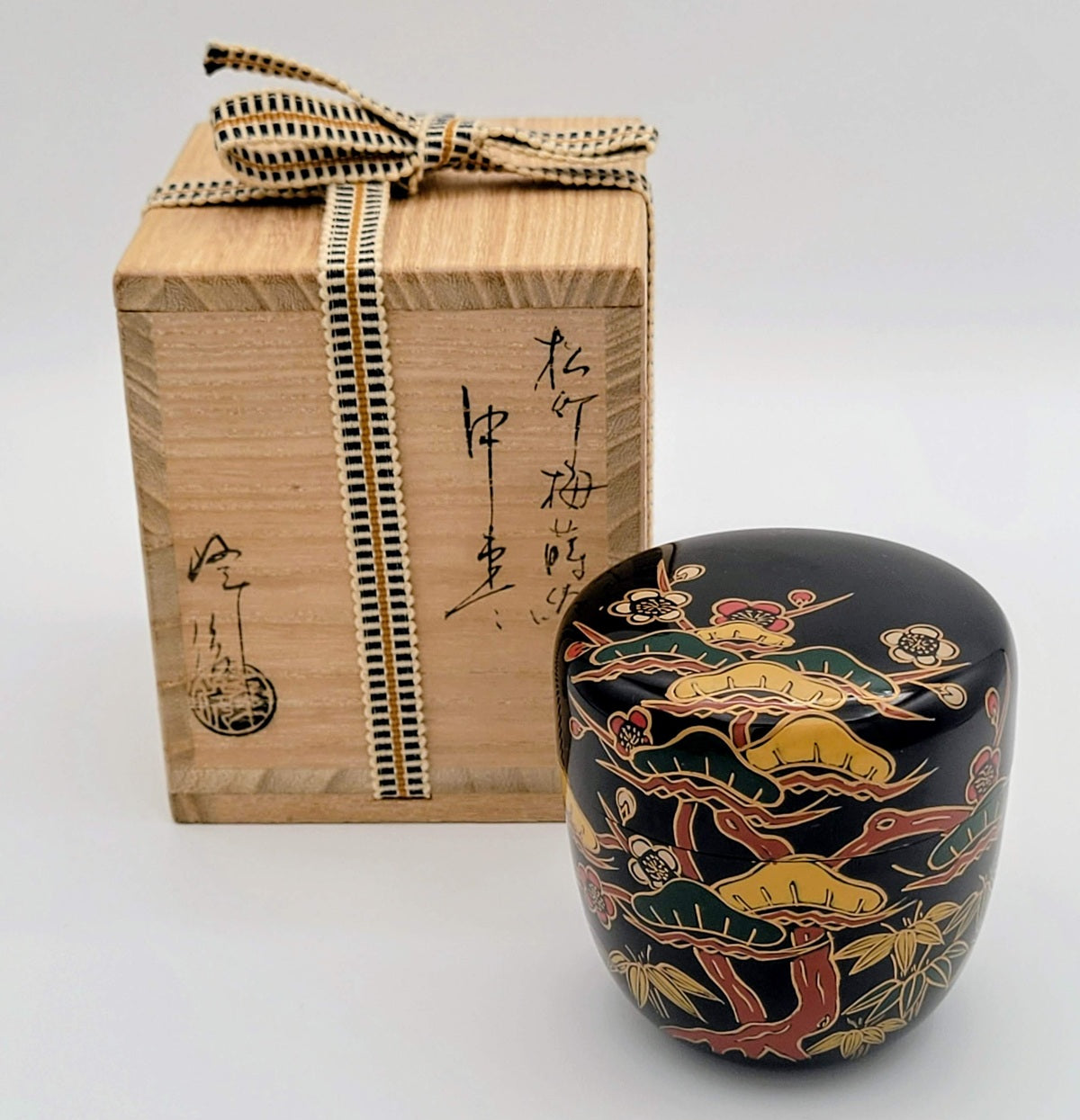
Matcha natsume with Shochikubai motif 松竹梅 Sakata Minetosh
Matcha natsume with Shochikubai motif 松竹梅 Sakata Minetosh
Couldn't load pickup availability
This refined matcha chu-natsume is crafted by Sakata Minetoshi and richly decorated with a traditional Shochikubai (松竹梅) motif using the classic maki-e lacquer technique. Shochikubai (pine, bamboo, and plum blossom) is a beloved symbolic theme in Japanese aesthetics and represents steadfastness, resilience, and new beginnings.
The natsume's surface is finished with deep black urushi lacquer , to which the motif is subtly applied with gold-colored maki-e powder. The combination of luster, refined lines, and natural symbolism creates a harmonious whole that exudes both tranquility and elegance.
This natsume fits comfortably in the hand and is ideal for use during the Japanese tea ceremony (chadō) . At the same time, it is a special object for collectors and enthusiasts of Japanese lacquerware, which also comes into its own as a decorative art object outside the tea room.
- Title: Shochikubai 松竹梅
- Maker : Sakata Minetoshi
- Period Late Showa to early Heisei (ca. 1980–2000)
- Technology Urushi lacquer, Maki-e
- Chu-natsume size
- Dimensions approx. Ø 6.5 cm × H 6.0 cm
- Material Wood core with natural urushi lacquer
- Motif: pine, bamboo and plum blossom
- Includes: Original tomobako with signature
- Condition: Excellent, no cracks, scratches or paint loss
- Origin Japan
Symbolism
The Shochikubai motif (pine, bamboo, and plum blossom) is one of the most classic and beloved symbolic combinations in Japanese culture. These three plants are considered together to express good fortune, prosperity, and moral strength, and traditionally appear on ceremonial objects, tea utensils, and gifts.
- Pine (松, matsu) is an evergreen and withstands wind, cold, and snow. Therefore, the pine symbolizes steadfastness, loyalty, and longevity . In the context of the tea ceremony, the pine symbolizes inner peace and the ability to remain dignified and steadfast under all circumstances.
- Bamboo (竹, take) grows quickly, is hollow, and bends without breaking. This makes bamboo a symbol of flexibility, resilience, and inner purity . It recalls the importance of modesty and adaptability—core values of Japanese aesthetics and Zen thought.
- Plum blossoms (梅, ume) bloom early in the year, often even while the winter cold lingers. This makes the plum blossom a symbol of renewal, hope, and the beginning of a new season . They symbolize the courage to show beauty and growth despite adversity.
Together, these three plants form a harmonious whole that expresses not only happiness and prosperity, but also a moral ideal: to be steadfast like the pine, flexible like bamboo, and hopeful like the plum blossom. For this reason, Shochikubai is ideally suited for use in the tea ceremony, where nature, symbolism, and inner attitude converge.