Matcha natsume Hagi 萩 and Hibari 雲雀 Nakamura Sōetsu
Matcha natsume Hagi 萩 and Hibari 雲雀 Nakamura Sōetsu
Couldn't load pickup availability
- Creator: Nakamura Sōetsu (中村宗悦)
- Type: chū-natsume
- Materials: wood, red urushi lacquer shu-urushi, maki-e (powdered gold & vermilion)
- Diameter: ≈ 6.8 cm
- Height: ≈ 7 cm
- Condition: Excellent condition, suitable for both use and collection.
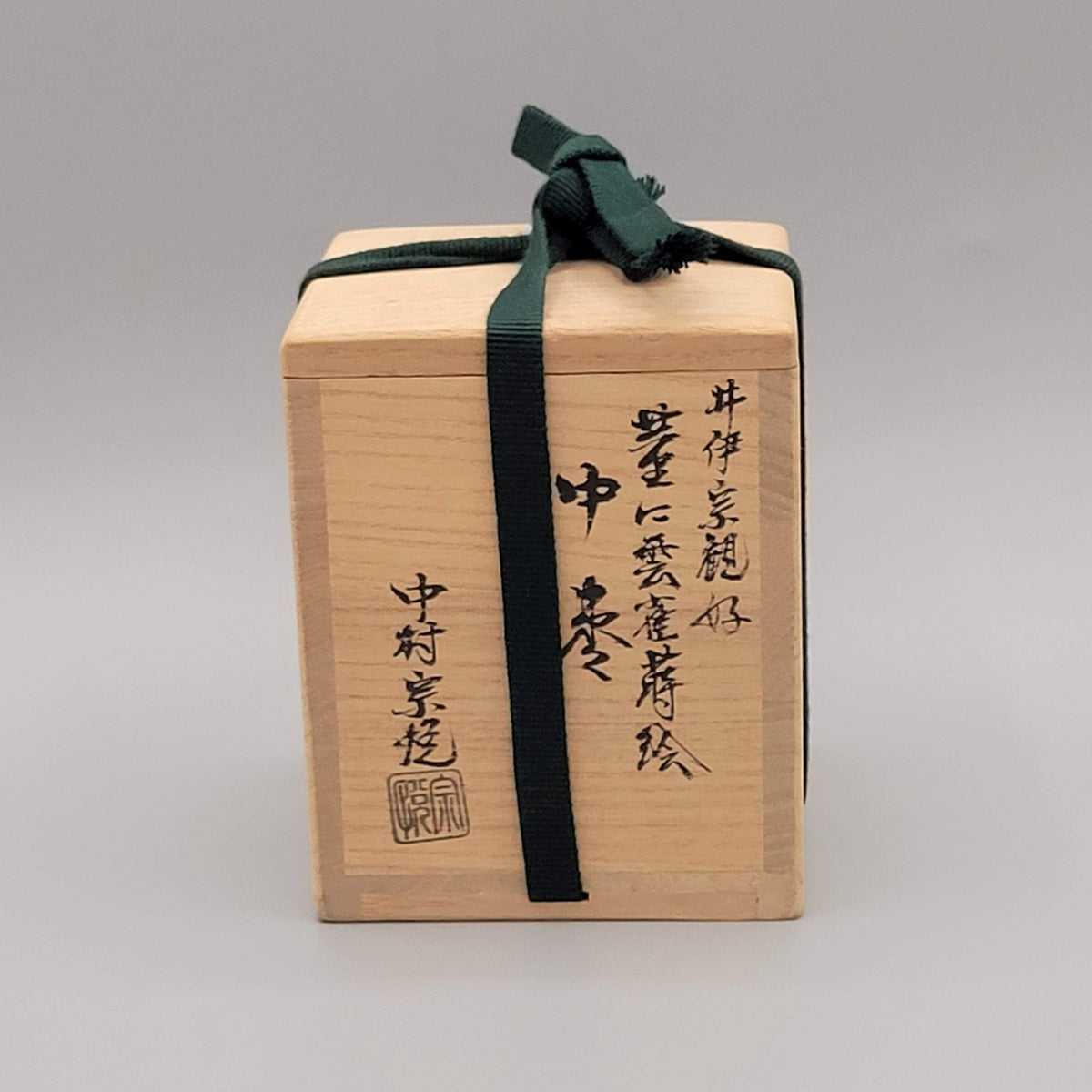
- Accessories: Original tomobako with hanko, calligraphy.
- Accessories: Original fukusa / cloth (共布) Includes the same maker's stamp
Nakamura Sōetsu (b. 1932) is a Japanese master of traditional lacquerware ( urushi , maki-e ). He learned the craft from his father at a young age and later specialized in making objects for the Japanese tea ceremony, such as natsume (tea caddies), chabako , and other chadōgu . His work is known for its elegant, nature-inspired designs (birds, flowers, plants) and the use of refined techniques such as gold-maki-e and mother-of-pearl inlay. He has received several national awards in Japan and his work is collected internationally. In 1987, he also received an official tea ceremony title, confirming his status within the art of tea.
Symbolism Hagi (萩) and Hibari (雲雀)
This refined natsume is decorated with hagi (Japanese bush clover) and a hibari (lark), a classic combination from Japanese seasonal aesthetics. Hagi , one of the Seven Autumn Flowers, embodies understated elegance, tenderness, and the gentle melancholy of autumn. The hibari , known for its soaring flight, represents joy, freedom, and the dawning of new light.
Together they form a poetic scene where earth and air, silence and lightness meet. This combination references themes from classical waka poetry, which focuses on the beauty of transience —mono no aware .
In the context of the tea ceremony, this natsume brings an atmosphere of natural harmony, seasonality and quiet elegance , fitting for a moment of attention and contemplation.