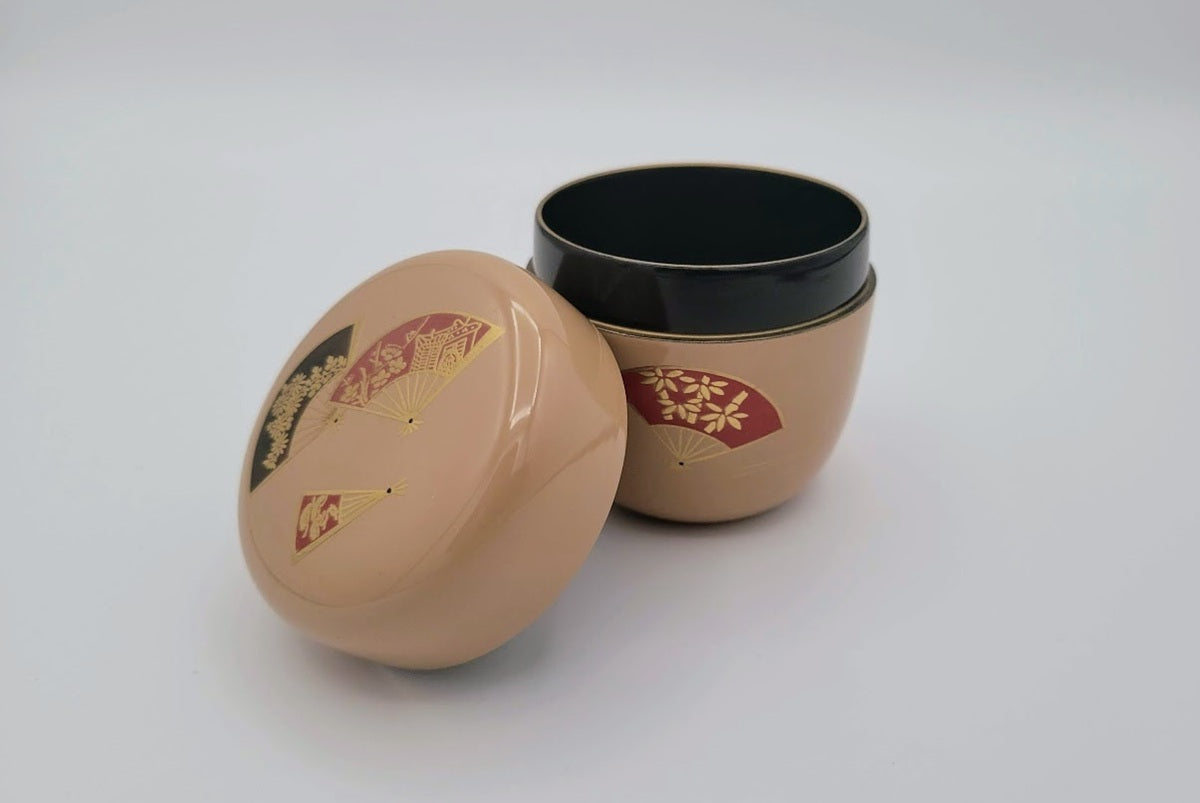
Matcha shiro-urushi natsume 橋爪庵 Hashizume-an
Matcha shiro-urushi natsume 橋爪庵 Hashizume-an
Regular price
$205.00 USD
Regular price
Sale price
$205.00 USD
Taxes included.
Quantity
Couldn't load pickup availability
A fine natsume (matcha tea caddy) from the Yamanaka Onsen region, Kaga (Ishikawa), Japan, signed on the original wooden box (tomobako) as 「橋爪庵 造」 made by Hashizume-an , with the red studio stamp (hanko) containing the character 庵.
The natsume is finished with white urushi lacquer (shiro-urushi) , a subtle sheen that allows the warm texture of the wood to shine through. The surface is decorated with gold and silver fan motifs (扇面蒔絵 / senmen maki-e), on which delicate floral patterns representing the four seasons appear: plum blossom, orchid, pine, and chrysanthemum. The shape is classic nakatsume, a medium-height tea caddy with rounded shoulders, and the whole rests in its original tomobako (wooden box) with a matching cloth (tomobukuro).
- Creator: Hashizume-an (橋爪庵造)
- Title: Senmen Ichimen (洗面一面)
- Technique: maki-e (扇面蒔絵)
- Material: wood, urushi lacquer
- Diameter: ≈ 6.5 cm
- Height : ≈ 6.6 cm
- Condition: Excellent, undamaged
- Origin: Yamanaka Onsen, Ishikawa Prefecture, Japan
- Dating: ca. 1980–2000
- Accessories: original tomobako (共箱) and cloth (共布)
The maker, Hashizume-an (橋爪庵) , is likely connected to the Hashizume family of lacquerware masters from Wakayama (Urushi Kobo Hashizume), who have been active in the Japanese urushi tradition for four generations. The workshop in Yamanaka was known for refined tea ceremony utensils (chadōgu) with light color tones and modern elegance.
In this natsume Senmen Ichimen , four symbolic plants are depicted within the fan motifs ( senmen maki-e ), which together represent the seasons and their associated virtues . The plum blossom (梅, ume) represents spring and symbolises resilience and new beginnings; the orchid (蘭, ran) refers to summer and embodies inner elegance and understated grace; the chrysanthemum (菊, kiku) evokes autumn and stands for nobility and longevity; while the pine (松, matsu) represents winter as a sign of steadfastness and imperishability. Together, these motifs form a poetic cycle of nature, fitting for the tranquil harmony of the tea ceremony.
The technique used combines traditional maki-e (gilding with gold powder) with subtly inlaid metallic pigments, a method mainly used in the late Shōwa and early Heisei periods (ca. 1980–2000).