Tokufu natsume 徳風棗 Nakamura Sōin
Tokufu natsume 徳風棗 Nakamura Sōin
Couldn't load pickup availability
This elegant Tokufu Natsume (徳風棗) was created by Nakamura Sōin (中村宗尹) after original design by the 11th Urasenke tea master Gengen Saikō (玄々斎). Sōin is a contemporary Kaga maki-e artist who studied under Toyoshima Bunshū. The piece was created with the support of Masuda.
- Creator: Nakamura Sōin (中村宗尹)
- Title: Ichiryū manbai (「粒万倍」)
- Type: Tokufu Natsume
- Material: Urushi maki-e
- Diameter: ≈ 8.4 cm
- Height: ≈ 6.3 cm
- Condition: Excellent;
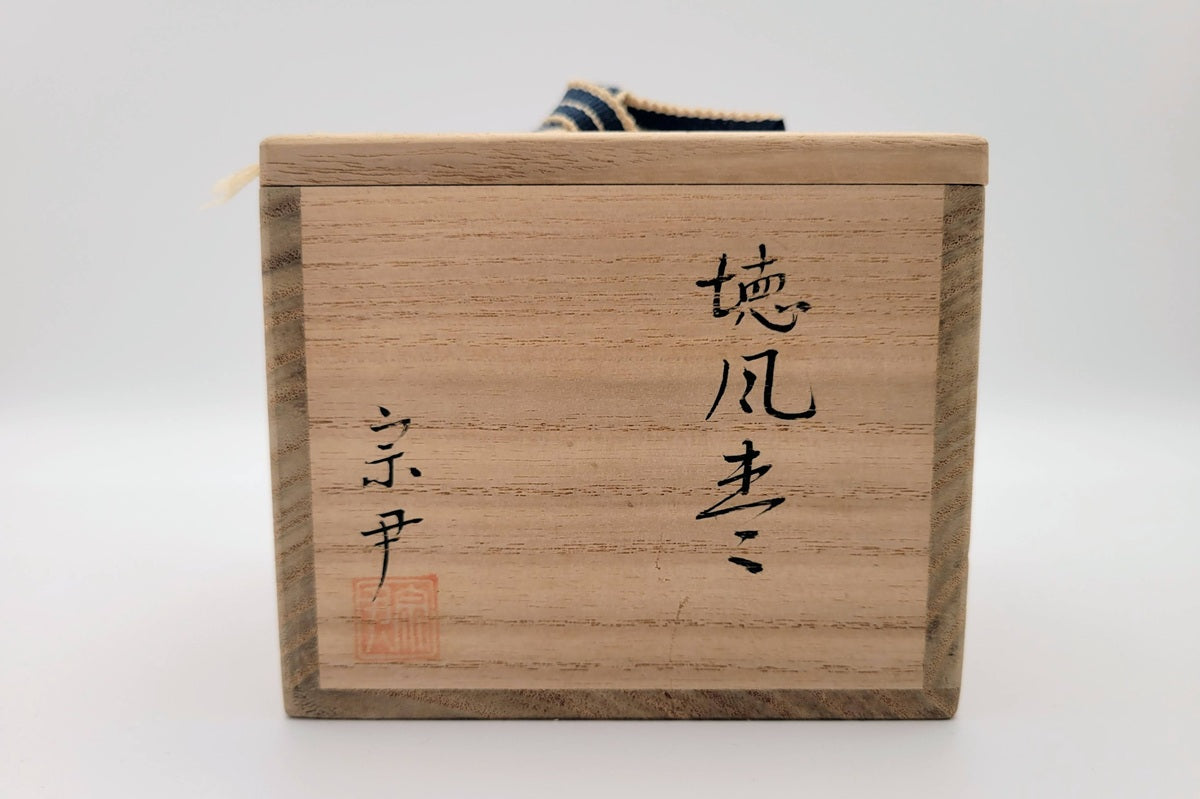
- Accessories: Original tomobako with hanko, calligraphy and cloth.
- Extra: Biography of the creator.
This refined natsume, intended for usucha (thin matcha), exemplifies the balance between simplicity and symbolism. The deep black lacquer exudes tranquility and serenity, while the gold maki-e decoration subtly shimmers in the light. The lid features the phrase "粒万倍" (ichiryū manbai – "One grain can multiply into ten thousand") in elegant calligraphy. The idea comes from a Japanese proverb emphasizing that small beginnings can lead to great fruition or success, a traditional Japanese wish for prosperity and growth. Nine grains of rice are depicted in gold on the inside of the lid, a reference to the harvest and the abundance that can come from a single seed.
The natsume demonstrates the highest level of craftsmanship: the lacquer is even and glossy, the maki-e is fine and precise, and the finish is meticulously crafted. The piece comes with its original wooden tomobako (storage and presentation box) and accompanying tray.
The artist Nakamura Sōin trained with his father, Kawakita Ryōzō , recognized as a Holder of Important Intangible Cultural Property for woodturning ( hikimono ) within the Yamanaka-nuri tradition of Ishikawa. He then honed his skills under Toyoshima Bunshū , a leading master of the Kaga-maki-e style, known for his refined decorations and traditional tea ceremony objects.
Under Bunshū, Sōin developed a characteristic style in which technical perfection and natural motifs harmoniously combine, a heritage that clearly builds on both the wood and lacquer traditions of his teachers.